
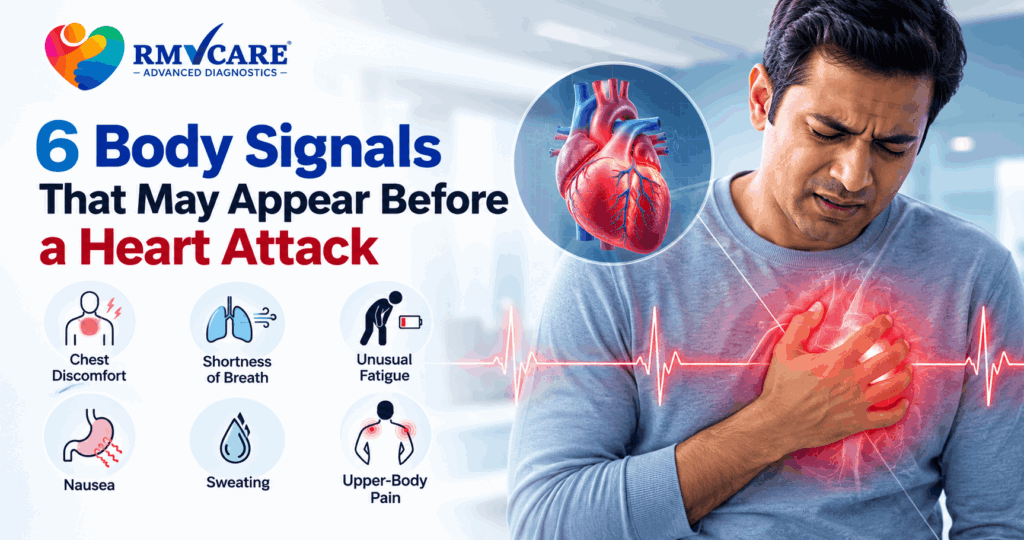
6 Body Signals That May Appear Before a Heart Attack
A heart attack can happen suddenly, but the body may sometimes show warning symptoms that should not be ignored. Recognising these heart attack warning signs can help a person seek medical attention quickly.
A heart attack occurs when blood flow to part of the heart muscle becomes blocked or significantly reduced. Without timely treatment, the heart muscle can become damaged. www.heart.org
Not everyone experiences the same symptoms. Some people may have significant chest discomfort, while others may mainly experience breathlessness, nausea, unusual tiredness or pain in another part of the upper body.
Here are 6 important body signals that may indicate a heart problem or possible heart attack.
1. Chest Pressure, Tightness or Discomfort
One of the most recognised signs of a heart attack is discomfort in the centre of the chest.
It may feel like:
- Pressure or heaviness
- Tightness or squeezing
- Burning or discomfort
- Fullness in the chest
- Pain that lasts for several minutes
- Discomfort that goes away and returns
Chest discomfort should not automatically be assumed to be acidity or indigestion, particularly when it is unusual, persistent or accompanied by other symptoms.
The American Heart Association notes that heart attack-related chest discomfort may last more than a few minutes or may disappear and return. www.heart.org
Do not ignore new or unexplained chest discomfort. Seek urgent medical evaluation.
2. Pain or Discomfort in the Arm, Shoulder, Jaw, Neck or Back
Heart-related discomfort does not always remain in the chest.
Pain or discomfort may spread to other parts of the upper body, including:
- One or both arms
- Shoulders
- Back
- Neck
- Jaw
This is one reason heart attack symptoms can sometimes be mistaken for muscle pain, dental problems or other common conditions.
According to the American Heart Association, discomfort involving the arms, back, neck, jaw or stomach can occur during a heart attack. www.heart.org
If unexplained upper-body discomfort occurs together with chest pressure, breathlessness, sweating or nausea, it should be treated as a potential medical emergency.
3. Shortness of Breath
Sudden or unusual shortness of breath can be another warning sign.
You may feel:
- Breathless even without significant physical activity
- Unable to take a comfortable deep breath
- unusually tired while walking or climbing stairs
- Breathless along with chest discomfort
Importantly, shortness of breath can occur with or without chest discomfort during a heart attack. www.heart.org
Breathlessness has many possible causes, so it does not automatically mean that someone is having a heart attack. However, sudden or unexplained breathing difficulty—especially when accompanied by other symptoms—requires prompt medical attention.
4. Unusual Tiredness, Weakness or Lightheadedness
Feeling extremely tired without an obvious reason can sometimes accompany heart-related problems.
Some people may experience:
- Unusual fatigue
- Weakness
- Lightheadedness
- Dizziness
- Feeling faint
These symptoms can easily be attributed to stress, lack of sleep or a busy routine. However, when unusual fatigue or lightheadedness occurs together with chest discomfort, breathlessness, nausea or sweating, it should not be ignored.
The American Heart Association lists unusual tiredness, lightheadedness and feeling faint among possible heart attack symptoms. www.heart.org
5. Nausea, Vomiting or Indigestion-Like Discomfort
Heart attack symptoms can sometimes resemble digestive problems.
A person may experience:
- Nausea
- Vomiting
- Stomach discomfort
- A feeling similar to indigestion
- Burning or discomfort in the chest
This can make it difficult to recognise a heart attack, particularly when there is little or no obvious chest pain.
Nausea and vomiting are recognised possible symptoms of a heart attack, and women may be more likely to experience symptoms such as nausea, unusual fatigue, shortness of breath or back and shoulder discomfort. www.heart.org
If digestive-like symptoms are sudden, unusual or accompanied by other warning signs, medical assessment should not be delayed.
6. Cold Sweating or Sudden Sweating
Breaking out into a cold sweat without an obvious reason can be another warning sign.
For example, if someone suddenly becomes sweaty while experiencing:
- Chest pressure
- Breathlessness
- Nausea
- Dizziness
- Upper-body pain
it is important to seek urgent medical attention.
Cold sweating is recognised as one of the possible warning signs associated with heart attack. www.heart.org
Can Heart Attack Symptoms Be Different in Women?
Yes. Although chest pain or discomfort remains a common heart attack symptom in women, women can also experience symptoms that may appear less typical.
These can include:
- Unusual tiredness or weakness
- Shortness of breath
- Nausea or vomiting
- Back, shoulder or jaw discomfort
- Anxiety
- Indigestion-like symptoms
Because some of these symptoms can resemble everyday health problems, they may sometimes be overlooked. www.heart.org
This is why unusual or sudden symptoms should be taken seriously, particularly when several symptoms occur together.
Are These Always Signs That a Heart Attack Is About to Happen?
No.
These symptoms can have many different causes and do not necessarily mean that a person will have a heart attack.
For example, chest discomfort can occur because of digestive problems, muscle strain or other medical conditions. Similarly, fatigue and breathlessness can have numerous causes.
However, because heart attacks can be life-threatening, new, severe or unexplained symptoms should not be self-diagnosed.
A heart attack can also occur without obvious warning symptoms. Some people experience a “silent” heart attack with mild or unusual symptoms that may not immediately be recognised. www.heart.org
What Should You Do If You Notice These Symptoms?
If you or someone around you develops symptoms that could indicate a heart attack, do not wait to see whether they disappear.
Seek emergency medical care immediately, especially when symptoms include chest pressure or discomfort, difficulty breathing, pain spreading to the arm, jaw, neck or back, sweating, nausea or faintness. www.heart.org
Do not attempt to diagnose the problem based only on an online article.
Every minute can matter during a heart attack.
How Can Heart Health Be Monitored?
6 Body Signals That May Appear Before a Heart Attack
Regular health assessments can help identify cardiovascular risk factors and provide useful information about heart health.
Depending on your symptoms, medical history and risk factors, a healthcare professional may recommend investigations such as:
ECG
An ECG (electrocardiogram) records the electrical activity of the heart and can help healthcare professionals assess certain heart-related problems.
2D Echo
A 2D echocardiogram uses ultrasound to create images of the heart and helps assess its structure and function.
Stress Test
A cardiac stress test evaluates how the heart responds to increased physical activity and may be recommended in selected patients based on symptoms and clinical assessment.
The appropriate test depends on the individual’s symptoms and medical history. A diagnostic test should always be recommended and interpreted by a qualified healthcare professional.
Who Should Pay More Attention to Heart Health?
Heart health deserves particular attention if you have risk factors such as:
- High blood pressure
- Diabetes
- High cholesterol
- Smoking or tobacco use
- Obesity
- Physical inactivity
- A family history of heart disease
- Previous heart or blood-vessel problems
Having risk factors does not mean that a heart attack will definitely occur. However, discussing your cardiovascular risk with a healthcare professional can help you understand whether regular monitoring or testing is appropriate.
Frequently Asked Questions About Heart Attack Warning Signs
What are the first warning signs of a heart attack?
Common warning signs include chest pressure or discomfort, pain in the arms or upper body, shortness of breath, unusual tiredness, lightheadedness, nausea and sweating. Symptoms can vary considerably between individuals.
Can a heart attack happen without chest pain?
Yes. Some people may experience symptoms such as shortness of breath, nausea, unusual fatigue, dizziness or discomfort in the back, jaw, neck or arms without obvious chest pain.
Can indigestion be a sign of a heart attack?
Heart attack symptoms can sometimes feel similar to indigestion or heartburn. If indigestion-like discomfort is sudden, unusual or occurs with other symptoms such as breathlessness, sweating or chest pressure, seek urgent medical evaluation.
What are heart attack symptoms in women?
Women can experience chest discomfort as well as symptoms such as unusual tiredness, shortness of breath, nausea, vomiting, back or shoulder discomfort and anxiety.
When should I seek emergency medical help?
Seek emergency medical help immediately if you experience symptoms that could indicate a heart attack, particularly chest pressure or discomfort, severe breathlessness, pain spreading to the arm, jaw, neck or back, sweating, nausea or fainting.
Conclusion
Knowing the warning signs of a heart attack can help you recognise when something may be seriously wrong. Chest discomfort, upper-body pain, shortness of breath, unusual fatigue or lightheadedness, nausea and cold sweating are important symptoms to know.
However, these symptoms do not always mean that a heart attack is occurring, and a heart attack may sometimes have subtle or no obvious warning symptoms.
If you experience sudden or unexplained symptoms that could indicate a heart attack, don’t wait for them to get worse. Seek emergency medical care immediately.
For ongoing heart-health concerns, speak with a qualified healthcare professional about the appropriate evaluation and diagnostic tests for you.